Price-rise guide
SIM-Only Price Rises in 2026: Who Puts Prices Up, and Who Doesn't
A cheap SIM can become less cheap if its price rises while you are still committed. This guide explains how annual mobile price increases work in 2026, which providers use them and which currently say they do not.
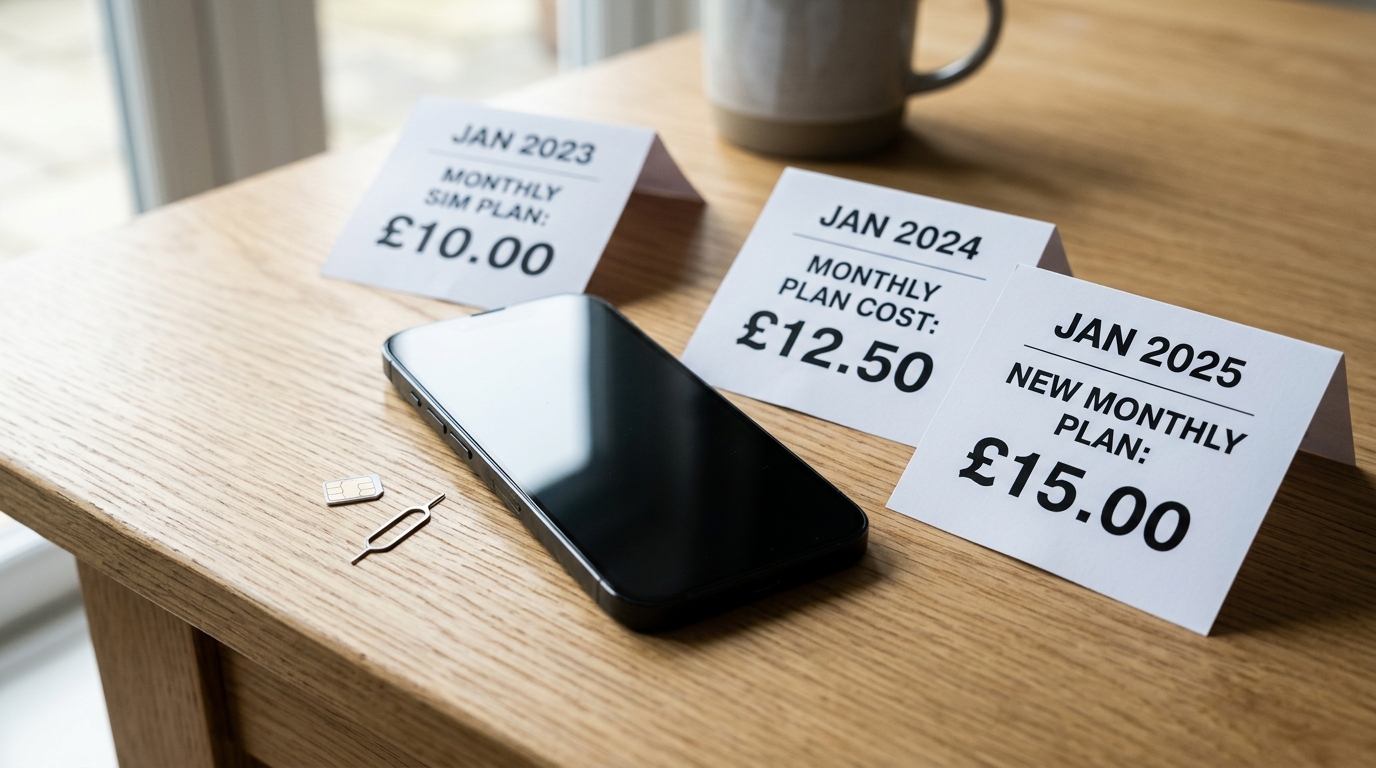
For a short rolling plan, the answer may simply be to switch when the price changes. For a 12-, 18- or 24-month contract, the advertised monthly price is only part of the cost. The price-rise wording can matter just as much.
What changed under Ofcom's rules?
Ofcom requires mobile and broadband providers to make any in-contract price-rise term clear in pounds and pence before a customer signs up. The purpose is to make increases predictable rather than leaving customers to guess how inflation might affect a bill.
This does not mean a provider can never raise a price. It means the relevant contract wording should tell you what the change will be. For account-specific rights, read the agreement you accepted and Ofcom's current consumer guidance.
Read Ofcom's guidance on predictable price rises →
SIM-only price-rise policies at a glance
| Provider | Current policy to check | What it means in practice |
|---|---|---|
| EE | Stated annual increase on relevant plans | Check the exact pounds-and-pence figure in the plan terms. |
| O2 | Stated annual increase on relevant plans | Compare the schedule with the contract length and total cost. |
| Vodafone | Stated annual increase on relevant plans | Check the plan page and terms before ordering. |
| Three | Stated annual increase on relevant plans | Look for the applicable plan terms and effective date. |
| iD Mobile / Talkmobile | Provider-specific plan policy | Do not assume every flexible or low-price plan is treated the same. |
| Lebara / SMARTY / giffgaff | Current marketing states no annual SIM-only price rises | Still check any introductory price and the final plan terms. |
Important: This table is a guide to the type of policy to check, not a substitute for the terms attached to the exact SIM you buy. Promotions, plan types and provider policies can change.
How the major networks approach annual increases
EE
EE publishes information about annual price changes for affected customers. The important detail is the price-rise amount attached to the plan you choose, not the EE brand name on its own. Longer contracts can cross more than one annual change date.
O2
O2's price information explains the terms that apply to eligible plans. If you are comparing a low introductory price with another provider's fixed price, calculate the full commitment rather than assuming the first payment continues unchanged.
O2: prices and annual changes →
Vodafone and Three
Vodafone and Three both publish price-rise information for relevant contracts. As VodafoneThree continues bringing its networks together, the consumer brands and plan terms still need to be checked individually. A shared network direction does not make every SIM policy identical.
Vodafone SIM-only plans → · Three price-increase information →
Providers that currently advertise no annual SIM-only price rises
Some providers explicitly market a no-annual-price-rise policy on SIM-only plans. That can make the monthly cost easier to predict, particularly for a 12-month term. It does not remove the need to check the price schedule: an introductory offer can still move to its stated regular price.
- Lebara: currently promotes no annual price rises on its SIM-only plans.
- SMARTY: currently states that it does not put prices up annually.
- giffgaff: currently promotes flexible monthly plans without annual price rises.
Policies are provider statements, so confirm them on the current product page before purchase.
A worked comparison: why the policy matters
Imagine a £10-a-month 24-month SIM that starts in September and rises by £2.50 each April. If it is £10 for seven months, £12.50 for the next 12 months and £15 for the final five months, the total is about £295, rather than £240 at a flat £10.
That does not mean a plan with an annual increase is automatically poor value. It may include more data, better coverage or a lower starting price. The useful comparison is the likely total cost alongside the features you need.
How to choose a SIM if you want predictable bills
- Check the term. A 30-day rolling plan gives you more freedom to reassess than a longer fixed contract.
- Read the stated price schedule. Look for a fixed amount, a no-rise policy, or any introductory-to-ongoing price change.
- Calculate the minimum cost. Compare the full commitment where a plan has a fixed term.
- Check coverage and features. Data, roaming, 5G and eSIM support still matter if the SIM will be your main connection.
- Confirm on the provider site. The provider's checkout and terms are the final source before you buy.
Compare SIM deals with no annual price rises → · Compare 30-day SIM deals →
Frequently asked questions
Can a mobile provider increase my price during a contract?
It can only do so where the contract clearly set out the exact rise in pounds and pence before you joined. If the price-rise term was unclear or relied on inflation, you may have different rights. Check the provider terms and Ofcom guidance for your agreement.
Which SIM-only providers say they do not have annual price rises?
Policies can change, but providers such as Lebara, SMARTY and giffgaff currently market SIM-only plans without annual price rises. Always check the exact plan terms before ordering.
Are 30-day SIMs protected from price rises?
A rolling 30-day plan is more flexible because you can normally leave at the end of a monthly period. That does not make every price permanently fixed, so check the provider policy and the current price.
Is a fixed pounds-and-pence rise better than an inflation-linked rise?
It is more predictable because you can calculate it in advance. Whether it is better value depends on the starting price, rise amount, contract length and alternatives available when the price changes.
What should I compare besides the monthly price?
Compare the price schedule, minimum term, data allowance, network coverage, roaming, eSIM support and the provider’s stated price-rise policy.
Sources and methodology
This guide was checked against primary provider price-change pages and Ofcom consumer guidance on 15 September 2026. Provider terms can change, so we link to the relevant official pages rather than treating a policy as permanent.